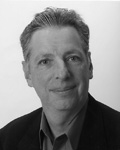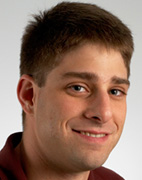
We regret to inform you that due to illness our January 9th event with Noah Rosenberg has been cancelled. We hope to reschedule for the near future and will alert you to those details.
Sunday, January 9, 2011 at 11:00 am, Holocaust Memorial Center
Since the early days of the field of human genetics, it has been recognized that genetic tools can provide insight into the nature of the relationships between different Jewish communities. To what extent do different Jewish populations share a common genetic ancestry? How does the level of genetic similarity of Jewish populations with each other compare to that between Jewish populations and their non-Jewish historical neighbors? Now that studies of the human genome have dramatically enhanced our ability to understand patterns of human genetic variation and their history, it is becoming increasingly possible to investigate relationships among Jewish populations, with finer and finer resolution. This talk will examine recent developments in the field of Jewish population genetics, with a focus on studies conducted in an ongoing partnership between our laboratory at the University of Michigan with scientists at Tel Aviv University and the Hebrew University of Jerusalem.
Noah Rosenberg is Associate Professor of Human Genetics, Biostatistics, and Ecology & Evolutionary Biology at the University of Michigan. He received his B.A. in mathematics from Rice University and his M.S. in mathematics and Ph.D. in biological sciences from Stanford University, and he completed a postdoctoral fellowship in the molecular and computational biology group at the University of Southern California. Rosenberg’s research focuses on mathematical and statistical problems and evolutionary biology and human genetics, with a focus on the analysis of human genetic variation. He is the author of over 60 peer-reviewed scientific publications, which have appeared in such journals as Bioinformatics, Evolution, Genetics, Nature, Science, and Theoretical Population Biology.

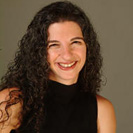



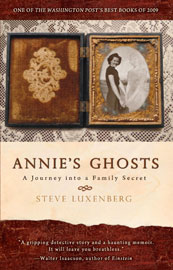 Part memoir, part detective story, part history, Annie’s Ghosts revolves around three main characters (my mom, her sister and me as narrator/detective/son), several important secondary ones (my grandparents, my father and several relatives whom I found in the course of reporting on the book), as well as Eloise, the vast county mental hospital where my secret aunt was confined—despite her initial protestations—all of her adult life.
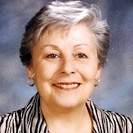
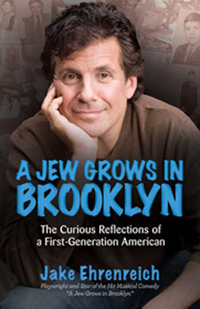 A companion to his popular Broadway musical comedy, A Jew Grows in Brooklyn is filled with memories of baseball, popcorn and realizing the American dream. A documentary about Ehrenreich’s life is in the works for release later this year.