Burton Historical Collection

Tuesday, December 6, 2011 from 6-8 PM
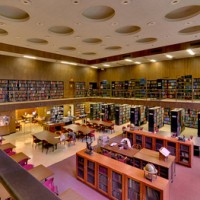
Burton Historical Collection
Detroit Public Library
5201 Woodward Avenue, Detroit, MI 48202

Photo © SNWEB.ORG Photography, LLC 

Created on the foundation of Clarence M. Burton’s private library, the Burton Historical Collection (BHC) incorporates original documents, genealogical materials, a Rare Book Collection, the Ernie Harwell Sports Collection, and a sizable image collection. Read more about the Collection and its holdings here.

  • Car pooling:
    Meet at the Plaza Deli at 5:15 PM
    Northwestern and 12 Mile
  • Not car pooling:
    Drive down on your own
    Meet at the Burton collection at 6 PM
    DPL parking: free in the employee parking lot after 6 PM (the gates may be up earlier, around 5:30 PM);

Cost: free to JGSMI and JHSMI members; $5 non-members; $36 dues may be paid that evening

Contact: Jim Grey (work 248-540-9070; home 248-553-4999; cell 248-739-9070; email gentrex@aol.com or GreyCo@aol.com)

Read More...
Sunday, December 18, 2011 at 10:30 AM, at the Holocaust Memorial Center

Description
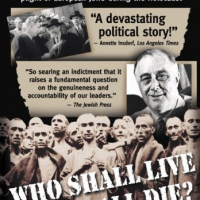
This penetrating documentary about America’s knowledge of the Holocaust during the Second World War dares to ask, “Could the Jews of Europe have been saved?”

Documentary filmmaker Laurence Jarvik boldly confronts this question, exploring the actions and inaction of the Roosevelt Administration and American Jewish leaders and exposing the political tradeoffs that kept the doors closed to Jewish emigrants fleeing the Nazi regime. Requests were made to bomb Auschwitz, set up a Jewish army and construct rescue havens, yet no action was taken.

Containing previously classified information, contemporary interviews and rare newsreel footage, this film is a unique chronicle of important decisions made by the American political and Jewish establishments during World War II. Who Shall Live and Who Shall Die? provides a much needed history lesson for all who are either too young to know, or who were never told the facts.” (Neil Barsky, Jewish Students Press Service).

Critical Acclaim
“A devastating political story!” – Annette Insdorf, The Los Angeles Times

“There”s never been anything quite like this small, spare independent production.” – David Ehrenstein, The Los Angeles Herald Examiner

Director: Laurence Jarvik
Country: U.S.
Genre: Documentary
Type: B&W
Year: 1981
Language: English
Length: 85 mins.

Read More...

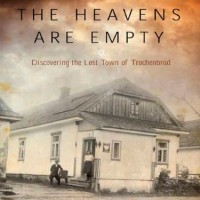
Join us as we co-sponsor Avrom Bendavid-Val, author of The Heavens Are Empty at the 60th Annual Diamond Jewish Book Fair.

Trochenbrod was a small village in the Ukraine with a large Jewish community of mostly farmers.

And then it disappeared.

First the Soviets invaded the town; then the Nazis turned it into a ghetto. By the end of the war, fewer than 40 Jews from Trochenbrod remained.

Avrom Bendavid-Val’s grandfather and father lived in Trochenbrod, and the two men often spoke of a charming little town far apart from the rest of the world, a place with seven synagogues, a candy store, bakeries, furniture makers, a restaurant, and where life was happy.

Today, Trochenbrod (the setting for Jonathan Safran Foer’s Everything is Illuminated, where it is called Trachimbrod) is only dirt and fields. In The Heavens Are Empty, Avrom Bendavid-Val brings it to life.

Read More...

DC2011

Sunday, September 11, 2011 at 10:00 am, Holocaust Memorial Center

Join us as JGSMI members share their experiences at the recently held IAJGS Conference on Jewish Genealogy. We’ve picked our favorite and most interesting conference sessions to share with you!

Read More...

DC2011

Sunday, August 14 through Friday, August 19, 2011 in Washington, DC

For Jewish Genealogists doing research on family in the United States there probably is no better place than in Washington, DC. And in 2011 that opportunity will come to fruition when the 31st IAJGS International Conference on Jewish Genealogy will be hosted in DC by the Jewish Genealogy Society of Greater Washington (JGSGW); this time at the Grand Hyatt Washington from August 14-19. The cost to attend the entire week-long conference is $310; on-site registration beginning August 14 is $340. Register online at dc2011.org.

The beautiful Grand Hyatt is centrally located on H Street between 10th and 11th Streets. A tunnel from the hotel lobby leads directly to the Washington Metro system for ease in traveling about the city to the National Archives, Library of Congress, Holocaust Museum, and other area sights. Chinatown and theatres and conveniently located. The hotel has 888 rooms and 40,000 square feet of conference space which will be dedicated to the conference.

Three of JGSMI’s board members will be presenting at this year’s conference!

Librarian Gayle Saini will be leading two computer workshops:

  • Little-Known Free Online Resources, $25 fee
    August 14th from 9:30 – 11:30 AM
  • The Yad Vashem Shoah Victims’ Database, $25 fee
    August 15th from 7:30 – 9:15 AM

Corresponding Secretary Diane Freilich will present:

  • Introduction To Genealogy
    August 14th from 9:30 – 10:45 AM
  • Charting the City Directory, a Variety of Uses
    August 16th from 3:45 – 5:00 PM
  • Tools To Uncovering American Court Records
    August 19th from 8:00 – 9:15 AM

Past President and Cemetery Project Chair Marc Manson will present:

  • Sanborn Insurance Maps, City Directories & Maps
    August 14th from 3:45 – 5:00 PM

Conference Highlights this Year:

The conference programs will take place on two levels accessible from the main lobby by elevator and escalator. On one level there will be banquet and kosher food facilities, as well as the cyber classroom, resource room, theatre and smaller meeting rooms. On the other level, a massive ballroom will be divided into lecture halls and a comfortable central lounge for networking and relaxing between events. A vendor room will be adjacent to the lecture halls. The cyber café with sufficient computers connected to internet resources will be set up in the central lounge.

For conference attendees who will be staying at the Grand Hyatt, the guaranteed guest room rate has been negotiated at the same rate as the 2008 IAJGS conference in Chicago – $199. As the conference draws closer, the program will be fleshed out to excite and interest the large group of attendees. Events at venues unique to Washington are planned.

Read More...

Sunday, October 16, 2011 at 5:00 PM, at the West Bloomfield Public Library

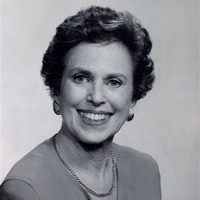
Join us as we host Sallyann Amdur Sack, Editor of Avotaynu, The Journal of Jewish Genealogy as part of:

TELLING FAMILY STORIES
A Year Long Initiative by the Jewish studies Program at MSU on Jews, Genealogy and History

American Jews are always telling family stories: in literature, in memoir, in ?lm, through family trees, and around the kitchen table.

What do these stories mean? What do they reveal—and what do they obscure? How do they help individuals understand their community, their ethnic identity, and their origins? How are these stories different from—and how are they similar to—the stories of other Americans? How has American history affected ordinary individuals’ family stories? How have ordinary families’ everyday decisions shaped American history? Telling Family Stories explores the intersections between personal family stories and academic studies of families. The history of American families begins with your family story.

Read More...

Sunday, November 20, 2011 from 10am to 1pm, Holocaust Memorial Center.

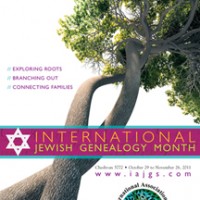
Join us for a day of learning in honor of International Jewish Genealogy Month, observed every year during the Hebrew month of Cheshvan (October 29 – November 26, 2011). This month honors our Jewish ancestors through the pursuit of Jewish family history research.

10:00 – 10:50 AM (choose one of two sessions):
Diane Frielich—“Introduction to Genealogy”
Various avenues of genealogical research including: U.S. Naturalization, Ship Manifests, WWI Draft Registrations, Social Security Death Index, U.S. Census, Newspapers, Cemeteries, Funeral Records and Vital Records, Oral Interviews, overview of internet genealogy and more.

Ruth Rosenberg—“One person’s answer to organization of genealogical
materials”

Most of genealogists are struggling with organizing their genealogical information and collections. Ruthie will share her creative solutions for organizational issues.


11:00 – 11:50 AM (choose one of two sessions):
Diane Frielich—“Charting the City Directory – Variety of Uses”
The city directory, published annually since mid 1860’s are a treasure trove of information for the genealogist. From alphabetical residential listings, occupations and household names to business listings and historical data, they are a good source in tracing known and unknown family member branches.

Richard Jaeger—“Digging deeper – the truth in the idea of six degrees of separation”
Using some initial data and available genealogy programs to discover how we are almost certainly all related to each other.


12:00 – 1:00 PM
Marc Manson—“The Shtetl of Detroit”
About the creation and on-going work on The Shtetl of Detroit

Read More...

Steve Klein

Sunday, February 6, 2011 at 11:00 am, Holocaust Memorial Center

The presentation will be targeted to non-technical users, and will focus on the most popular genealogy programs for Windows, Macintosh, and the web.

Each product will have a brief introduction and overview of its key features, comparision of its relative strengths and weaknesses.

If people want to submit questions in writing in advance, Steve will try to have answers ready. February 1 is the deadline for emailing questions to programs@jgsmi.org.

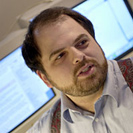
Steven Klein was a computer hobbyist in his teenage years, and parlayed his knowledge into a 25 year career in the IT field, having worked in as a Help Desk support specialist, an educational IT Specialist, a Network Engineer, and most recently as an IT Manager. He’s interrupted his professional career to pursue a BSIT degree at Lawrence Tech, and expects to graduate this summer.

His interest in genealogy was sparked last year when one of his cousins invited him and several family members to the myheritage.com website to build out the family tree of their maternal grandparents. Over the year they’ve added antecedents, siblings, descendants and spouses, and now they have 216 people listed.


Read More...

Kirsten Fermaglich, Ph.D.

Sunday, March 13, 2011 at 11:00 am, Holocaust Memorial Center

In the middle of the twentieth century, the numbers of petitions for name changes in New York City rose dramatically. In numbers disproportionate to the Jewish population in the city, the majority of name-change petitioners in NY bore Jewish names. This rise in Jewish name-changing has not been studied by historians and offers us a valuable window into American Jewish life during this era. Name-changing reflected both Jewish success and weakness in the American economy. Indeed, a close reading of New York City name change petitions allows us to reconsider the process by which American Jews became middle class during the twentieth century.

Kirsten Fermaglich (Ph.D. History, New York University) has taught at Michigan State University since 2001. Her book on American social scientists and Holocaust imagery, American Dreams and Nazi Nightmares: Early Holocaust Consciousness and Liberal America, 1957-1965, was published by Brandeis University Press in 2006. She has also published articles in American Jewish History, the Michigan Historical Review, and Southern Jewish History; her article on Mel Brooks’ The Producers is forthcoming in American Studies. She is currently researching the history of Jews and name-changing in the twentieth century for a book-length project tentatively entitled, “A Rosenberg By Any Other Name.” Fermaglich co-curated a 2002-2003 MSU museum exhibit, “Uneasy Years: Michigan Jewry During Depression and War” that was recognized by the Michigan Council for the Humanities as among the top 30 projects the Council supported in the past 30 years.


Read More...

Sunday, April 3, 2011 at 11:00 am, Holocaust Memorial Center

Co-sponsored with the Polish Genealogical Society of Michigan (PGSM)

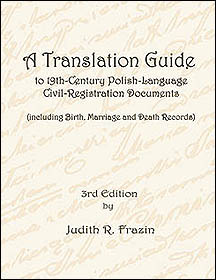
This practical and interactive presentation will first briefly discuss unique factors which impact 19th-century Polish research. Then, with audience participation, it will walk attendees step by step through the process of translating one 19th-century Polish document, and possibly two, if time permits. Documents will be passed out at the workshop.

About Judith R. Frazin
Ms. Frazin is the author of three editions of A Translation Guide to 19th-Century Polish-Language Civil Registration Documents (including Birth, Marriage and Death Records). In 2010, the IAJGS granted Frazin its award for Outstanding Contribution to Jewish Genealogy via the Internet, Print or Electronic Product. The Polish Genealogical Society of America recognized her contribution to the field of genealogy by selecting her to receive its Wiglia award in 2000. A genealogist for forty years, she was program chairperson for the 1984 national seminar on Jewish genealogy, served as president of the JGS of Illinois for ten years, and served as a member-at-large on the Board of the IAJGS for three years.

Read More...